How to Improve Indoor Air Quality in Los Angeles: Start With Your Ducts, Not Your Diffuser
The most effective way to improve indoor air quality in Los Angeles is to clean and seal your duct system before investing in filters, air purifiers, or anything else downstream. Every HVAC cycle pulls air through your return intakes — and in this basin, that air carries freeway-corridor PM2.5, post-fire ash, and Mojave dust that settles inside your ductwork and recirculates long after the outdoor event has passed. For a free assessment, call (866) 359-7544.
Why Los Angeles Makes Indoor Air Quality a Harder Problem Than Most Cities Admit
Most advice about improving indoor air quality was written for places where wind disperses pollutants. Los Angeles isn’t that place. The basin’s marine inversion lid — the layer of warm air that parks over the region and traps everything below it — means that during multi-day inversion cycles, PM2.5 from the 110, 10, and 101 freeway corridors sits at rooftop level, right where residential HVAC return intakes pull their air. Every time your system kicks on, it’s filtering that load. Some of it gets caught in your filter. A lot of it coats the inside of your ducts.
Add Santa Ana wind events, which run roughly October through March, and you get a second pulse: fine desert particulate and, increasingly, wildfire ash from the Angeles or Santa Monica Mountains. Matthew Gonzalez, Owner and Lead Technician at Elite Air Duct Cleaning Service Los Angeles, grew up in Boyle Heights and has spent 11 years opening duct systems across the city — from Silver Lake bungalows to newer Valley builds. His consistent finding after a sustained fire event is a visible gray-brown ash layer on the first run of supply-side ductwork in Koreatown and South LA apartments, even in units where the windows never opened. The ash gets in through the return air path, often drawn from shared hallways and under-door gaps in the loosely sealed multi-family buildings that dominate the 90057 and 90058 ZIP codes.
No HEPA purifier placed in the living room addresses what’s already coating the inside of those ducts.
The Sequence That Actually Works: What to Do, and in What Order
Getting the sequence right matters more than most homeowners realize. Skipping ahead to an air purifier purchase before dealing with a contaminated duct system is like fitting a new water filter to a pipe that’s corroded inside — the downstream fix is undermined by the upstream problem.
- Assess what’s in the duct system. Before anything else, understand what you’re working with. In pre-1978 properties throughout South LA and Koreatown, original duct insulation wrap or mastic sealing tape may contain asbestos — which means a hazmat assessment needs to happen before any mechanical cleaning begins. This is a non-negotiable step that most in-and-out crews skip entirely.
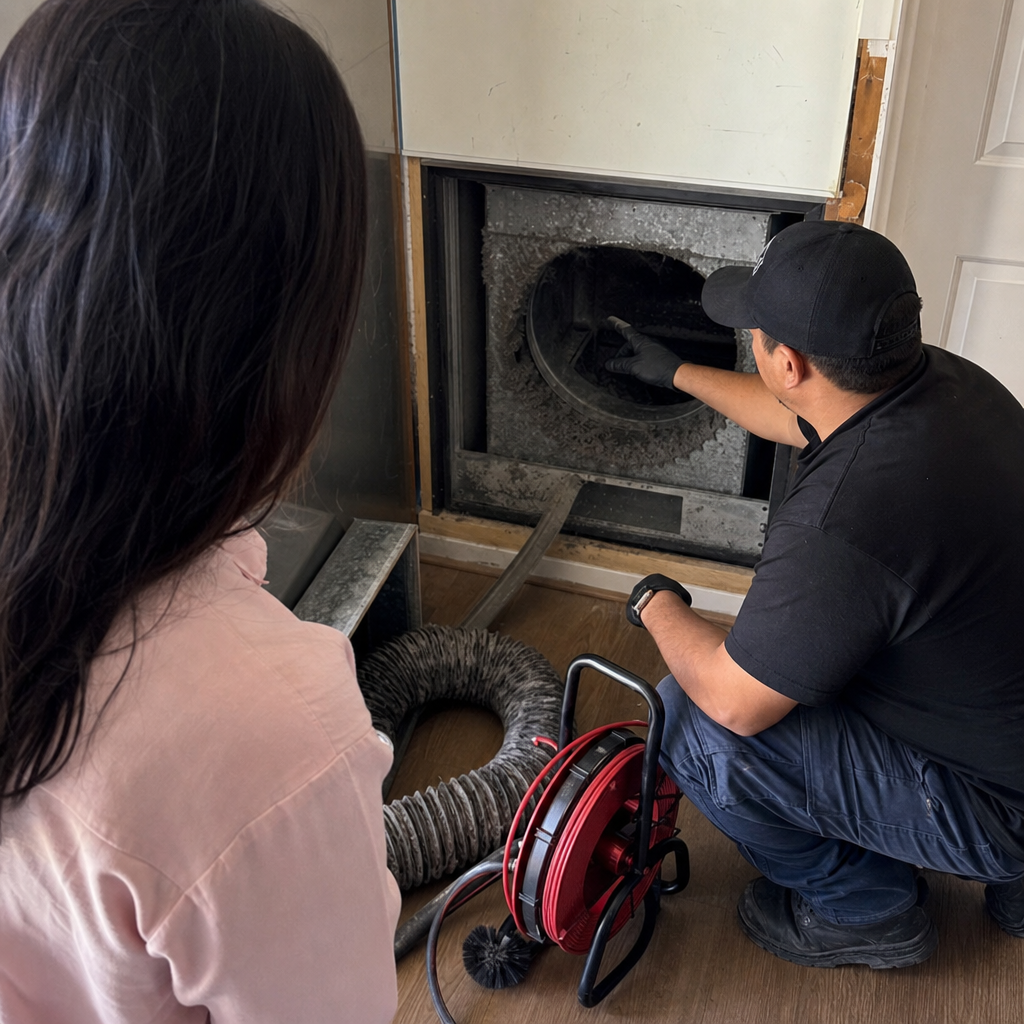
- Clean the duct system mechanically. Rotobrush and Nikro extraction systems agitate and vacuum the settled particulate load — ash, dust, pet dander, degraded insulation fibers — out of supply and return runs. This is not the same as a vacuum wand pushed into a register. Professional-grade negative-pressure extraction pulls the load out rather than redistributing it.
- Seal duct leaks. In the mid-century bungalows and apartment blocks built between the 1940s and late 1960s that make up much of the housing stock in ZIP codes like 90056 and 90059, duct connections have often never been properly sealed. Every gap is an infiltration pathway — drawing in unconditioned, unfiltered air from attic cavities, wall chases, or shared hallways. Sealing before you upgrade filtration is what locks in the benefit.
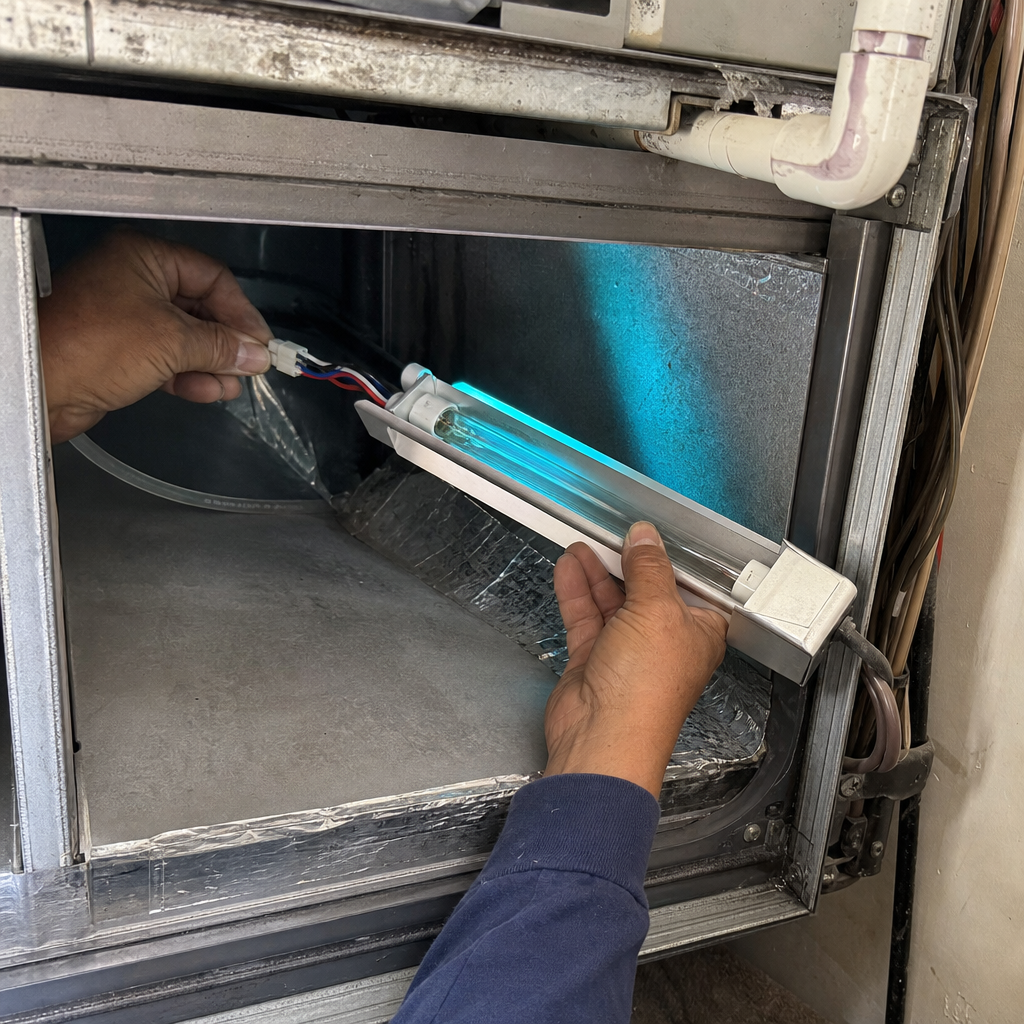
- Sanitize for microbial residue. Mechanical cleaning removes the particulate load. It doesn’t address what post-fire ash and years of humidity can leave behind: microbial residue that requires a separate treatment step. Our Air Quality & Sanitizing in Los Angeles service uses Abatement Technologies-class solutions for this — the same category of treatment used in commercial remediation work, not consumer-grade foggers.
- Upgrade filtration at the air handler. Now a higher-MERV filter or an Aprilaire whole-home filtration system actually delivers what it promises, because the duct system delivering air to it is clean, sealed, and not reintroducing a contamination load every cycle.
- Maintain the dryer vent. This one gets overlooked in the air quality conversation, but a partially blocked dryer vent forces humid, lint-laden exhaust back into the building envelope — a direct contributor to the microbial conditions that make air quality worse over time.
“Clean ducts don’t announce themselves — you just breathe better and stop wondering why your filter fills up so fast.”
What to Look For: Signs Your Duct System Is the Problem
Not every air quality complaint traces back to the duct system, but in Los Angeles housing stock, the odds are higher than most people expect. Here’s what tends to signal that mechanical cleaning and sealing should come before any other intervention:
- Filters filling up faster than the manufacturer’s rated interval — often a sign the duct system is pulling in unfiltered air from attic or wall cavities
- Visible discoloration or a gray smudge ring around supply registers, especially after a fire season or Santa Ana event
- Inconsistent airflow between rooms — one room comfortable, another always stuffy — which often points to a disconnected or collapsed duct run rather than a thermostat issue
- A musty or stale smell when the system first kicks on, particularly in multi-family buildings in the 90057 corridor where return air is drawn partly from shared hallways
- Allergy or asthma symptoms that don’t improve with window-closing or portable filtration
If two or more of these describe your situation, the duct system is almost certainly contributing — and addressing it first is the highest-leverage move available to you.
Mechanical Cleaning vs. Microbial Remediation: They’re Not the Same Thing
One distinction worth understanding clearly: particulate removal and microbial remediation are two separate interventions that address two separate problems. Rotobrush and Nikro extraction systems are built for the first — agitating and vacuuming out the settled load of dust, ash, dander, and debris that accumulates inside duct walls over years of cycling. That mechanical cleaning step is the foundation.
But post-fire ash, long-term humidity in older construction, and years of organic material accumulation can leave a microbial residue that no brush-and-vacuum system removes. In those cases, a sanitizing application — using solutions in the same class as Abatement Technologies products used in commercial remediation — is the appropriate follow-on step. Our Air Quality & Sanitizing service covers this specifically.
When Matthew is the technician running the job rather than a subcontractor relaying findings through a dispatcher, the assessment of what the duct system actually contains — ash layer, mold indication, degraded insulation — gets made in the moment, by someone with 11 years of direct observation across LA housing stock. That distinction changes what gets recommended and what doesn’t.
From our home base in Los Angeles, we serve the full basin — including the older multi-family corridor running through 90056, 90057, 90058, and 90059, where this work tends to matter most.
Frequently Asked Questions About Indoor Air Quality in Los Angeles
Professional air duct cleaning in Los Angeles typically runs between $300 and $600 for a standard single-family home, depending on system size, accessibility, and the condition of the ductwork. Multi-family units and systems requiring sanitizing as a follow-on step will range higher. Properties with potential asbestos-containing materials in pre-1978 duct insulation need a hazmat assessment first, which is priced separately. Call (866) 359-7544 for a free, no-pressure estimate — the quote is specific to your system, not a flat rate applied to every job.
An air purifier helps in the room it occupies, but it can’t address the recirculating load coming out of a contaminated duct system every time your HVAC cycles. In Los Angeles — where duct systems in older buildings may be carrying years of accumulated PM2.5, fire ash, and biological debris — cleaning and sealing the duct system first is what gives any downstream filtration investment a real foundation to work from. Brands like Aprilaire and Honeywell make genuinely effective whole-home systems, but their performance depends on what they’re pulling air through.
For most Los Angeles homes, every three to five years is a reasonable baseline — but that interval should be shorter if your system ran through a heavy fire season or a significant Santa Ana event, if you’ve noticed faster-than-usual filter loading, or if the system has never been professionally serviced. Post-WWII bungalows and apartment blocks in South LA and Koreatown with original ductwork that’s never been touched are in a different category entirely; those typically need a full cleaning and sealing assessment regardless of how recently any prior service occurred.
Yes — when allergies and asthma are triggered by the recirculating particulate load inside a contaminated duct system, removing that load directly reduces the exposure source. Pollen, pet dander, mold spores, and fine particulate (including post-fire ash) all accumulate on duct walls and get reintroduced into the breathing environment every time the system runs. Mechanical cleaning removes the settled load; a sanitizing step addresses any microbial residue. Neither step is a medical treatment, but both reduce what the system is putting into the air your household breathes.
If anything on this page describes what you’re seeing in your home, Elite Air Duct Cleaning Service Los Angeles is glad to take a look. No upsell, no pressure — just an honest assessment of what your system contains and what it actually needs. Call (866) 359-7544 to schedule a free estimate in Los Angeles.
Written by Matthew Gonzalez, Owner & Lead Technician at Elite Air Duct Cleaning Service Los Angeles, serving Los Angeles, CA.