Symptoms of Dirty Air Ducts in Los Angeles — What Your Home Is Actually Telling You
The most common symptoms of dirty air ducts are visible dust blowing from supply registers, a stale or musty odor when your HVAC runs, worsening allergy or asthma symptoms indoors, and filters that clog faster than they should. In Los Angeles specifically, a fourth symptom shows up that most generic guides miss entirely: a faint gray-brown film on the face of supply-side vents after a Santa Ana wind event or a fire season in the Angeles or Santa Monica Mountains — even in homes where the windows stayed shut the whole time. If you’re seeing that, your ducts have been working as a filter, and they’re full. Call (866) 359-7544 for a free assessment.
Why Los Angeles Ducts Show Symptoms Faster Than Almost Anywhere Else
After a sustained fire season, Matthew Gonzalez, Owner and Lead Technician at Elite Air Duct Cleaning Service Los Angeles, consistently finds a visible ash and particulate layer inside the first few feet of ductwork in Koreatown and South LA apartments — units whose residents swear they kept everything sealed. The reason is a detail most homeowners don’t realize: the return-air path in older, loosely built multi-family buildings draws from hallways and under-door gaps, not just from dedicated return grilles. Smoke and fine desert particulate get in through building envelope leaks before your filter ever sees them, and they coat the duct walls directly.
The geography makes this worse than it sounds. Los Angeles sits in a basin where marine-inversion layers can trap PM2.5 — the fine particulate from vehicle exhaust, wildfire smoke, and Mojave dust — at rooftop and breathing height for three to five consecutive days. The 110, 10, and 101 freeway corridors run directly through the ZIP codes we serve most (90099, 90101, 90103, and 90189), which means HVAC systems in these neighborhoods are cycling against some of the densest urban air pollution in the country. Every time your system runs, it pulls that air across the filter and into the duct cavity. Over a season or two, the accumulation is measurable.
Unlike coastal areas where ocean breezes flush pollutants regularly, the LA basin holds onto what it collects. That enclosed-basin effect is why dirty-duct symptoms can develop in 18 to 24 months here versus the 3-to-5-year cleaning interval that applies in cleaner-air markets.
The Seven Symptoms Worth Paying Attention To
Not every symptom means your ducts are critically fouled, but each one is a data point. Here’s what we actually see in Los Angeles homes and what each symptom tends to indicate:
- Dust blowing from supply registers when the system kicks on. The most reliable visual indicator. A thin puff of particulate at startup means the duct walls have accumulated enough debris that airflow disturbs it. In post-WWII bungalows across South LA and the mid-city corridor — many built between the 1940s and late 1960s — we regularly find original flex duct that has never been mechanically cleaned, and the first 12 inches inside the supply run look like the inside of a vacuum bag.
- Filters that load up in two weeks instead of the expected 30–90 days. A filter that clogs at double speed is evidence that the duct system upstream of it is shedding debris into the airstream. The filter isn’t failing — it’s doing extra work for a dirty system.
- Musty, dusty, or stale odors that appear only when the HVAC runs. Odors that disappear when the system is off are almost always duct-sourced. Microbial growth on the duct lining or on accumulated debris produces VOCs that the airstream carries into living spaces.
- Worsening allergy or asthma symptoms at home but not away from home. This pattern — better at the office, worse at home — points to an indoor air quality issue, and the duct system is one of the first places to check. Pet dander, mold spores, and fine dust all accumulate in ductwork and re-circulate with every cycle.
- Visible gray or tan film on register faces or diffuser fins. This is the LA-specific symptom. After a Santa Ana event or a significant fire in the foothills, that film can appear within 24–48 hours on supply registers across the basin. It’s not surface dust — it’s ash and PM2.5 that passed through the system and got deposited as airflow slowed at the register face.
- Uneven airflow or rooms that won’t heat or cool to setpoint. Debris accumulation restricts cross-sectional area inside ducts, especially at bends and transitions. A room that’s always 4–6°F off from the thermostat setting is worth investigating — partially blocked ductwork is a common culprit in older Los Angeles housing stock.
- HVAC running longer cycles to reach temperature. When the system has to work harder to push conditioned air through partially obstructed ducts, runtime increases. Longer cycles mean higher utility costs and accelerated wear on the air handler and blower motor.
A Note on Pre-1978 Housing and What “Dirty Ducts” Can Actually Mean
This is a detail that matters specifically in Los Angeles and that we won’t gloss over. Properties built before 1978 — and there are a substantial number of them in the neighborhoods we serve, particularly in South LA and Koreatown — can have duct insulation wrap or mastic sealing tape that contains asbestos. If your home falls in this category and your ducts haven’t been assessed, the symptom check above should be followed by a hazmat evaluation before any mechanical cleaning begins. Disturbing asbestos-containing materials without proper abatement creates a far more serious problem than dirty ducts ever could.
We don’t perform asbestos abatement, and we’re straightforward about that. What we will do is look at the duct materials during a walkthrough and flag anything that needs a certified abatement contractor before we touch it with a Rotobrush or Nikro system. That’s not a liability disclaimer — it’s just the right sequence of work, and any honest duct cleaning company operating in Los Angeles should be doing the same.
What a Professional Cleaning Actually Addresses
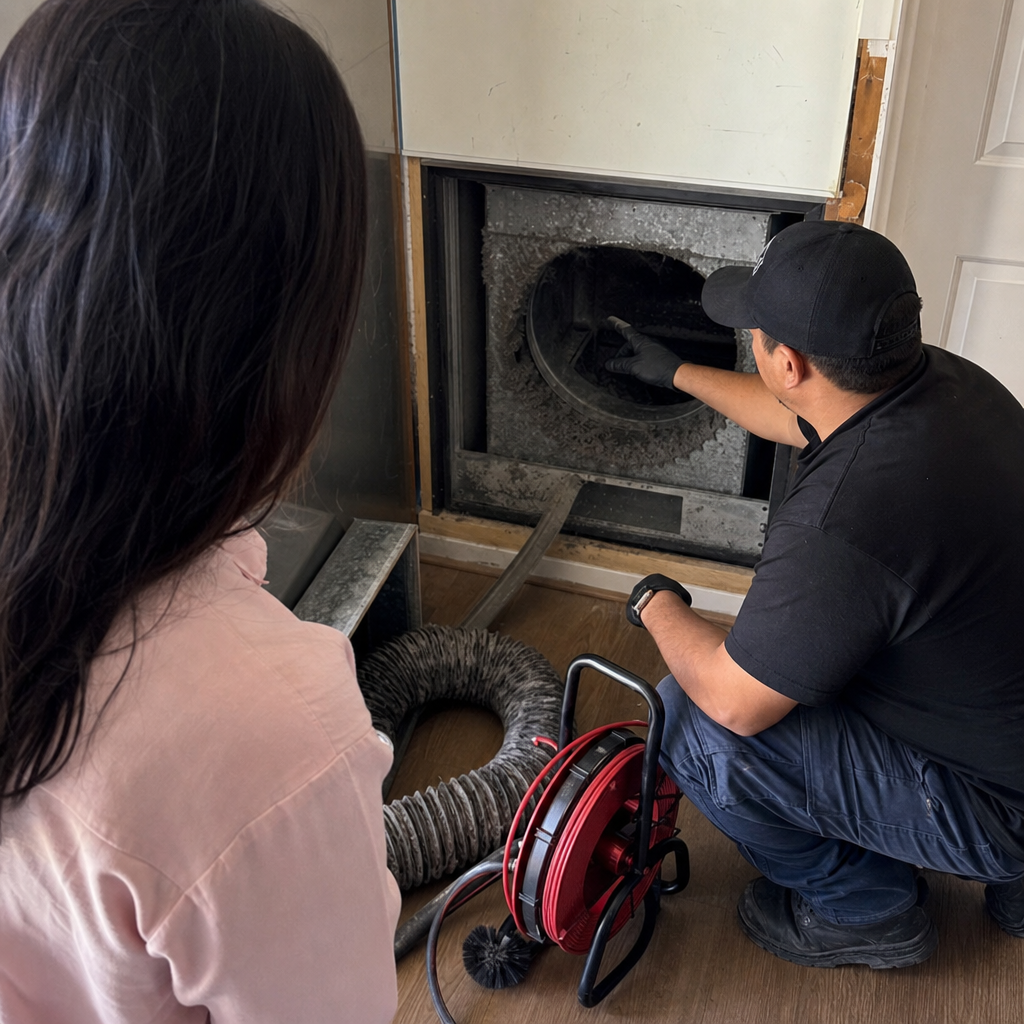
Running the Rotobrush agitates debris off duct walls while a Nikro negative-pressure system simultaneously draws it into a HEPA-filtered collection unit — so the material comes out of the duct system rather than getting redistributed through the house. That two-stage approach matters because a single-pass vacuum without mechanical agitation leaves compacted debris on duct walls, which is why some homeowners who’ve had “discount” duct cleaning done still report the same symptoms a month later.
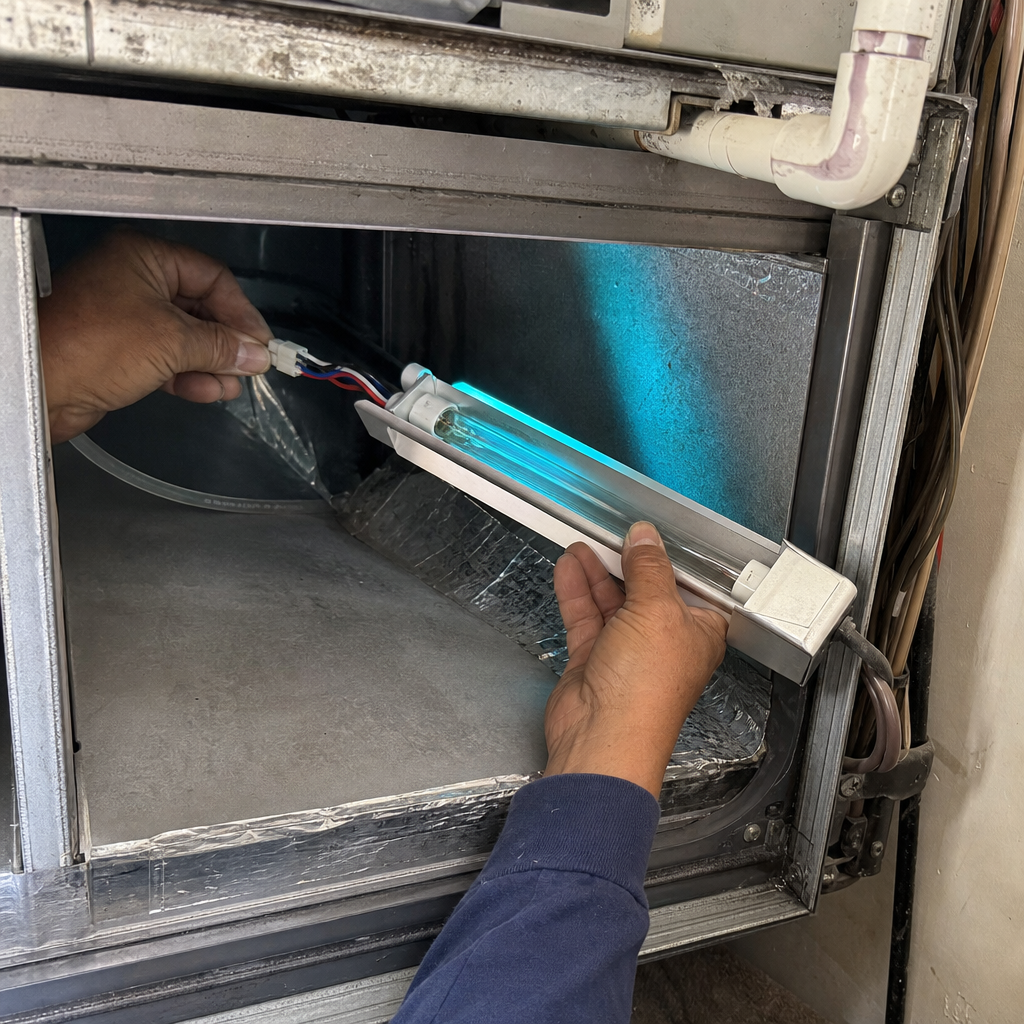
After mechanical cleaning, if microbial growth was present or if the system served a home with persistent humidity issues — which is less common in the dry LA basin but does occur in homes near the coast or with drainage problems — our Air Quality & Sanitizing service addresses what the vacuum can’t: biological contamination on duct surfaces. That step uses EPA-registered treatment applied to cleaned duct walls, and it’s the difference between removing debris and actually resetting indoor air quality.
Clean ducts don’t announce themselves — you just breathe better and stop wondering why your filter fills up so fast. That’s the baseline we’re working toward, and it’s also how you know the job was done right.
For homeowners curious about the broader picture of indoor air quality in Los Angeles, our guide to Air Quality & Sanitizing in Los Angeles covers what happens after the mechanical cleaning is done and how particulate and microbial concerns get addressed in one visit.
How to Check Your Own Registers Before Calling
- Turn on your HVAC fan (fan-only mode, not heat or cool). Hold a white tissue two inches from a supply register. If it picks up visible gray or tan particulate within 30 seconds, your duct walls are shedding debris.
- Remove a return-air grille and shine a flashlight into the first 12 inches of duct. A light coating of dust is normal. A compacted gray-black layer, visible debris accumulation, or any growth on the duct lining is not.
- Check your last three filter replacement dates. If filters are loading in under three weeks on a standard calendar, the upstream duct system is contributing to the load.
- Note whether symptoms are worse at night or after the system cycles. If family members wake up congested but feel better after being outside for an hour, that’s a strong behavioral indicator of duct-sourced particulate recirculation.
- Look at the register faces after any major wind event or fire smoke event. If you can wipe a visible layer of fine gray material off the diffuser fins, you have direct evidence of what’s been deposited further inside the system.
These checks are meant to give you a clearer picture before you call — not to replace a proper inspection, and definitely not to encourage reaching into older ductwork in a pre-1978 Los Angeles home before materials have been assessed. Think of them as diagnostic observations, not hands-on work.
Frequently Asked Questions About Dirty Air Duct Symptoms
If dust is coming out of supply registers when the system runs, or if you can see compacted gray material inside the first section of duct when you remove a grille, the accumulation is beyond surface-level and warrants professional cleaning. Surface dust on register faces alone — without duct-interior buildup or airflow symptoms — can often be addressed with regular filter changes and register cleaning. The distinction matters because you shouldn’t pay for a full duct cleaning if you only have register-surface dust, and a straightforward company will tell you that up front.
Yes — recirculated dust, pet dander, mold spores, and fine particulate from the Los Angeles basin’s PM2.5 load all accumulate in ductwork and get reintroduced into living spaces with every HVAC cycle. If your allergy symptoms are consistently worse at home than elsewhere, the duct system is a logical first place to investigate. Cleaning the ducts removes the accumulated reservoir; pairing that with a Honeywell or Aprilaire media filter upgrade reduces how fast it rebuilds.
In Los Angeles, every 2–3 years is a reasonable interval for most homes — shorter than the national 3–5 year guideline used in cleaner-air markets, because the basin’s thermal inversions, wildfire smoke events, and freeway-density particulate load HVAC systems significantly faster. Homes with pets, residents with respiratory conditions, or properties that experienced a nearby fire event should lean toward the shorter end of that range.
Dirty ducts most commonly produce a stale, dusty odor — similar to the smell of an old vacuum cleaner bag — that appears when the system runs and fades when it shuts off. A musty or mildew-adjacent smell points more specifically to microbial growth on duct surfaces or on debris that has absorbed moisture. A burning or acrid smell is different and warrants turning the system off and calling an HVAC technician rather than a duct cleaning company, since that can indicate electrical or heat-exchanger issues.
Schedule a No-Pressure Assessment in Los Angeles
If any of the symptoms above sound familiar — or if you’ve been in a Los Angeles home that hasn’t had its original ductwork touched in a decade or more — we’re happy to take a look and tell you honestly what we find. Elite Air Duct Cleaning Service Los Angeles offers free estimates with no obligation to book. Call (866) 359-7544 and Matthew will walk you through what the inspection involves before anyone touches your system.
You can also learn more about everything we do as a company on our home page.
Written by Matthew Gonzalez, Owner & Lead Technician at Elite Air Duct Cleaning Service Los Angeles, serving Los Angeles, CA.